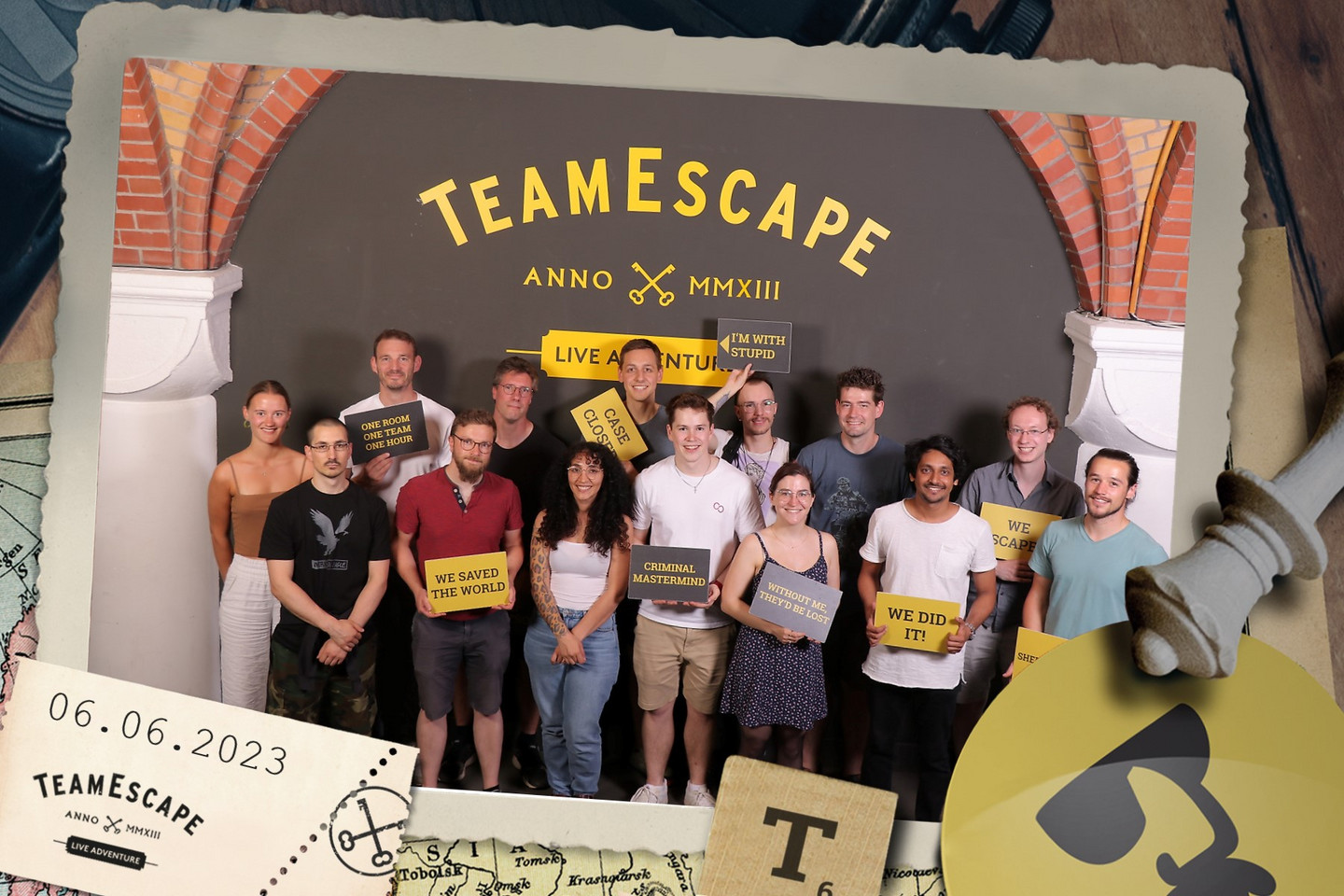
Team
-
Ilias Alexandridis Bachelorstudent
- Telefon
- +49-221-470-3457
-
ialexan
 ikp.uni-koeln.de
- Raum
- 230
As part of my bachelor thesis, I am working on the installation of a PIXE in-air setup on the FN Tandem accelerator. PIXE is an analytical method in which the material composition of a sample can be investigated using low-energy proton-induced X-rays.
-
Ferhat Altun Masterstudent
- Telefon
- +49-221-470-3632
-
faltunikp.uni-koeln.de
- Raum
- 202
I am working on the ALIS setup, and performing efficiency measurements for an AlO anion beam. My work will allow more precise measurements of Aluminum-26, a cosmogenic nuclide which is of high interest in geochronology.
-
Sebastian Brünsing Operateur
- Telefon
- +49-221-470-8695
-
sbruensingikp.uni-koeln.de
- Raum
- 223
I am operating both the 6 MV Tandetron accelerator, as well as of the 10 MV FN Tandem accelerator. I am also involved in the development of electronic systems enhancing our setups in the future.
-
Martina Gwozdz Doktorandin
- Telefon
- +49-221-470-4135
-
mgwozdzikp.uni-koeln.de
- Raum
- 209
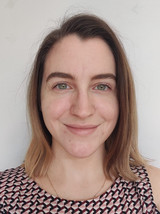
My field of research is Accelerator Mass Spectrometry using gaseous carbon-dioxide samples. Using a combination of an Elemental Analyzer, an Isotope Ratio Mass Spectrometer and a gas system I am pushing the limits for ultra-sensitive carbon-14 dating.
-
Dr. Stefan Heinze Wissenschaftler (Akad. Oberrat)
- Telefon
- +49-221-470-8690
-
heinzeikp.uni-koeln.de
- Raum
- 229
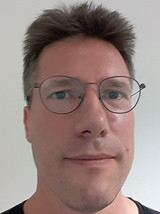
I am the head of operation at the 6 MV AMS maschine. I am responsible for all AMS measurements performed at CologneAMS and overlook the safety of all users. I am also involved in various research and development projects at the 6 MV AMS maschine.
-
Devin Hymers Doktorand
- Telefon
- +49-221-470-3600
-
dhymersikp.uni-koeln.de
- Raum
- 229
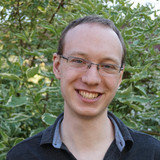
I am working on medical applications of nuclear physics. My Ph.D. project is creating a silicon tracker detector in collaboration with GSI Darmstadt. The detector will be used in cancer radiation therapy with heavy ions to better determine where the treatment beam is located in the patient during treatment.
-
Natasha Kalanke PhD Student

- Telefon
- +49-221-470-3600
-
nkalankikp.uni-koeln.de
- Raum
- 229
My PhD study is in exposure dating using AMS of Clorine-36 isotopes in calcium sulfate containing sediments and evaporites. The expected results will show increased levels of isobaric suppression thereby allowing precise isotopic ratio measurements.
-
Abdallah Karaka Masterstudent
- Telefon
- +49-221-470-3600
-
akarakaikp.uni-koeln.de
- Raum
- 229
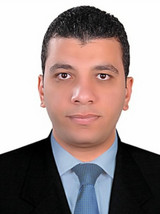
My interest lies in nuclear astrophysics. Using the AMS facilities I am researching the possibility to measure neutron capture rates of unstable nuclei, which is important to better understand the origin of elements in the universe.
-
Oscar Marchhart Doktorand (mit Uni Wien)
- Telefon
- +49-221-470-3632
-
omarchhikp.uni-koeln.de
- Raum
- 202
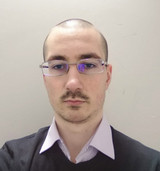
My Ph.D. topic is the development of Sr-90 AMS measurements using the new ALIS Laser Ionencooler, to be installed at the 6MV accelerator.
-
Prof. Dr. Dennis Mücher Gruppenleiter
- Telefon
- +49-221-470-3460
-
muecherikp.uni-koeln.de
- Raum
- 226
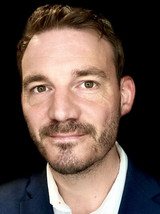
Since the summer of 2022 I am fortunate to work with this fantastic team on various aspects of applied nuclear physics. My personal interest is the origin of the elements in the universe. I am also working in the field of medical applications.
- Webseite
- Webseite
- per E-Mail kontaktieren
-
Timm-Florian Pabst Doktorand
- Telefon
- +49-221-470-4135
-
tpabstikp.uni-koeln.de
- Raum
- 209
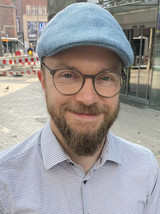
I have completed my Masters degree setting up a low-energy AMS system for the detection of tritium in reactor graphite samples. In my Ph.D. thesis I will continue exploring the possibilities of tritium detection and are also developing a high-performance particle detector for the 10 MV AMS setup.
-
Dr. Markus Schiffer Habilitand
- Telefon
- +49-221-470-4135
-
mschifferikp.uni-koeln.de
- Raum
- 209
I am the project leader of the new ALIS setup, a laser and ion cooler device for the suppression of isobars in AMS. I am supervising the students working on this interesting new project. In the past years I have developed numerous devices and setups at both the 6MV and 10MV AMS systems.
-
Christian Schlaier Masterstudent
- Telefon
- +49-221-470-3632
-
cschlaiikp.uni-koeln.de
- Raum
- 202
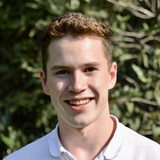
I am developing the AMS measurement for the Iodine-129 isotope. The results will improve our understanding of how plants grow in the Atacama desert, one of the most dry places on earth. This topic is part of the CRC1211 collaborative research centre.
-
Derin Schmidt Masterstudent
- Telefon
- +49-221-470-3457
-
dschmidikp.uni-koeln.de
- Raum
- 230
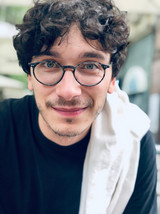
For my master’s thesis I am aiming to improve 26Al AMS measurements using element selective photo-detachment at the new Anion Laser Isobar Suppression (ALIS) setup.
-
Sebastian Schroeder Masterstudent
- Telefon
- +49-221-470-3632
-
sschroeikp.uni-koeln.de
- Raum
- 202
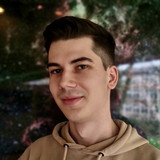
I am working on implementing segmented, highly pixelated silicon detectors into a computer simulation of Interaction Vertex Imaging, a method for range verification in heavy ion radiation therapy.
-
Marcus Sickmöller Bachelorstudent
-
msickmoeikp.uni-koeln.de
Within my bachelor thesis I investigate the stability of the FN tandem accelerator. This way we are going to improve future measurements.
-
Tom Sittig Masterstudent
- Telefon
- +49-221-470-4135
-
tsittigikp.uni-koeln.de
- Raum
- 209
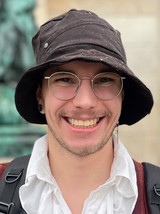
The topic of my Bachelor thesis is improving the sensitivity of Accelerator Mass Spectrometry using gaseous carbon dioxide samples for enhanced carbon-14 dating. I have found an improved way to prepare our samples to guaranty much more stable measurement results.
-
Gereon Weingarten, geb. Hackenberg Doktorand
- Telefon
- +49-221-470-3457
-
ghackenbergikp.uni-koeln.de
- Raum
- 230
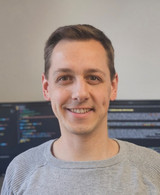
My Ph.D. work is on the isotope Sr-90, a hazardous isotope for humans and the environment. Using the 10MV Accelerator Mass Spectrometry setup I am able to detect very small amounts of this isotope. The results are important for a safe decommissioning of nuclear facilities.
-
Laila Weisel Masterstudentin
- Telefon
- +49-221-470-3621
-
lweiselikp.uni-koeln.de
- Raum
- 227
I wrote my bachelor thesis in the field of medical physics. I investigated the proton activation reactions of Mo-92 and Y-89 for a new proposed technique in proton therapy range verification. It is based on the implantation of a small metallic marker which emits characteristic gamma rays when activated by a proton beam.